
Dental Bone Grafting in Mission Viejo
A dental bone graft rebuilds jawbone lost after a tooth extraction, gum disease, or years of a missing tooth, so the jaw can support a dental implant. Dr. Arthur Johnson, a board-certified oral and maxillofacial surgeon, performs bone grafting and socket preservation at our Mission Viejo office for patients from Laguna Hills, Laguna Niguel, and across Orange County.
Once a tooth is gone, the bone that held it starts to shrink. Within months the ridge can become too thin or too short to hold an implant. A bone graft places graft material where bone is missing, and over the following months your own bone grows into it and replaces it.
Grafting is often a planned step in implant treatment. Many patients have the graft at the same visit as an extraction, then return for the implant once the area has healed.
Socket preservation after a tooth extraction
When a tooth is removed, Dr. Johnson recommends placing a bone graft in the empty socket in most cases. This is called socket preservation. It keeps the ridge from collapsing, which makes a future implant simpler and helps keep the gum line even.
Wisdom teeth are the usual exception, since nothing will replace them. A graft may still be recommended when an impacted lower wisdom tooth sits against the second molar, to protect the bone that supports that molar.
What to expect
A socket graft adds only a few minutes to an extraction. Rebuilding a ridge is a separate short procedure under local anesthesia, with nitrous oxide or IV sedation available. Expect soreness and swelling for a few days and a soft diet while the gums heal.
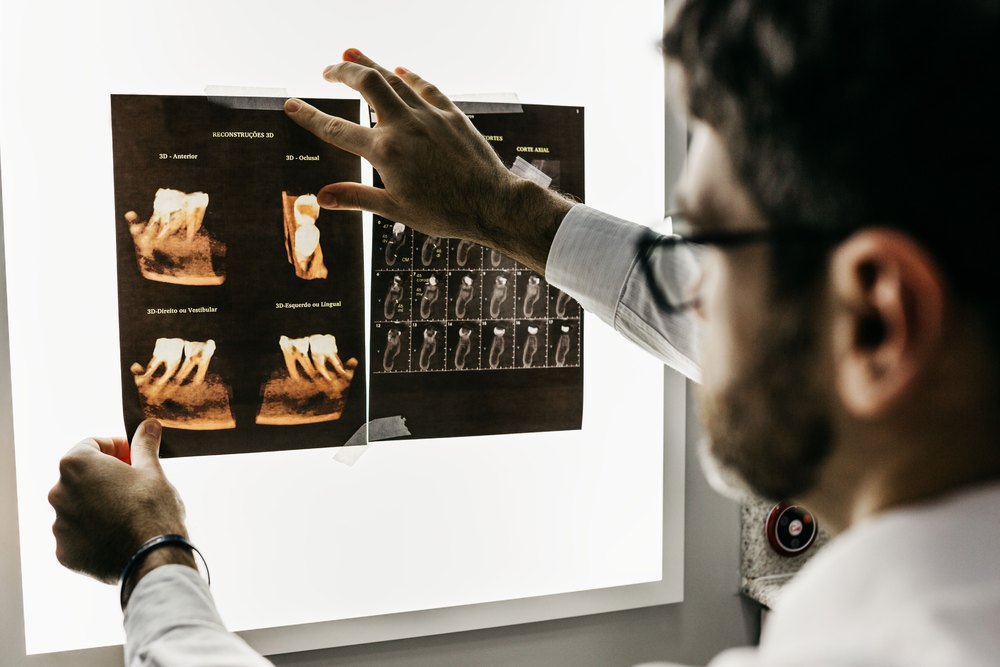
The graft then needs time to mature, usually three to six months, before an implant goes in. The surgeon checks the area with imaging before scheduling the implant.
Graft material can come from a donor source, an animal source, or a synthetic material. The surgeon explains which material suits your case and why.
How much does a dental bone graft cost?
The cost depends on the type and size of the graft, the material used, and whether it is done at the same visit as an extraction or an implant. A socket graft at the time of an extraction usually costs less than rebuilding a ridge later. You receive a written estimate after your exam, and our article on bone graft dental cost covers typical price ranges in more detail.
Our Mission Viejo office accepts many PPO dental plans and Denti-Cal. We do not accept HMO plans.
Bone grafting procedures we perform
- Socket preservation: a graft placed at the time of an extraction
- Ridge augmentation: rebuilding a jaw ridge that has narrowed after tooth loss
- Grafting at implant placement: adding bone around an implant as it goes in
- Grafting before full arch implants, planned from your Cone Beam CT scan
Frequently Asked Questions
Do I need a bone graft for a dental implant?
Not always. If the jaw has enough bone height and width, the implant can go in without a graft. A Cone Beam CT scan in our office measures the bone, so you know before surgery.
Is a bone graft after tooth extraction necessary?
It is not required, but Dr. Johnson recommends it after most extractions because it keeps the ridge from shrinking and keeps future implant options open. Wisdom teeth are usually the exception.
How long does a dental bone graft take to heal?
Soreness usually settles within a week. The graft itself takes about three to six months to mature before an implant can be placed, depending on the size of the graft.
Does a dental bone graft hurt?
The area is numbed and sedation is available. Afterward most patients have mild to moderate soreness for a few days that is managed with medication.
Where can I get a dental bone graft near me?
If you live in south Orange County, our office is at 25982 Pala Ste 120, Mission Viejo, CA 92691, close to Laguna Hills, Laguna Niguel, and Lake Forest. Call (949) 347-9990 to book a consultation.