
Oral Surgery
Socket Preservation Bone Graft After Tooth Extraction: Cost and Healing
By Dr. Arthur Johnson, DDS, MD · · Updated · 4 min read
Medically reviewed by Dr. Arthur Johnson, DDS, MD
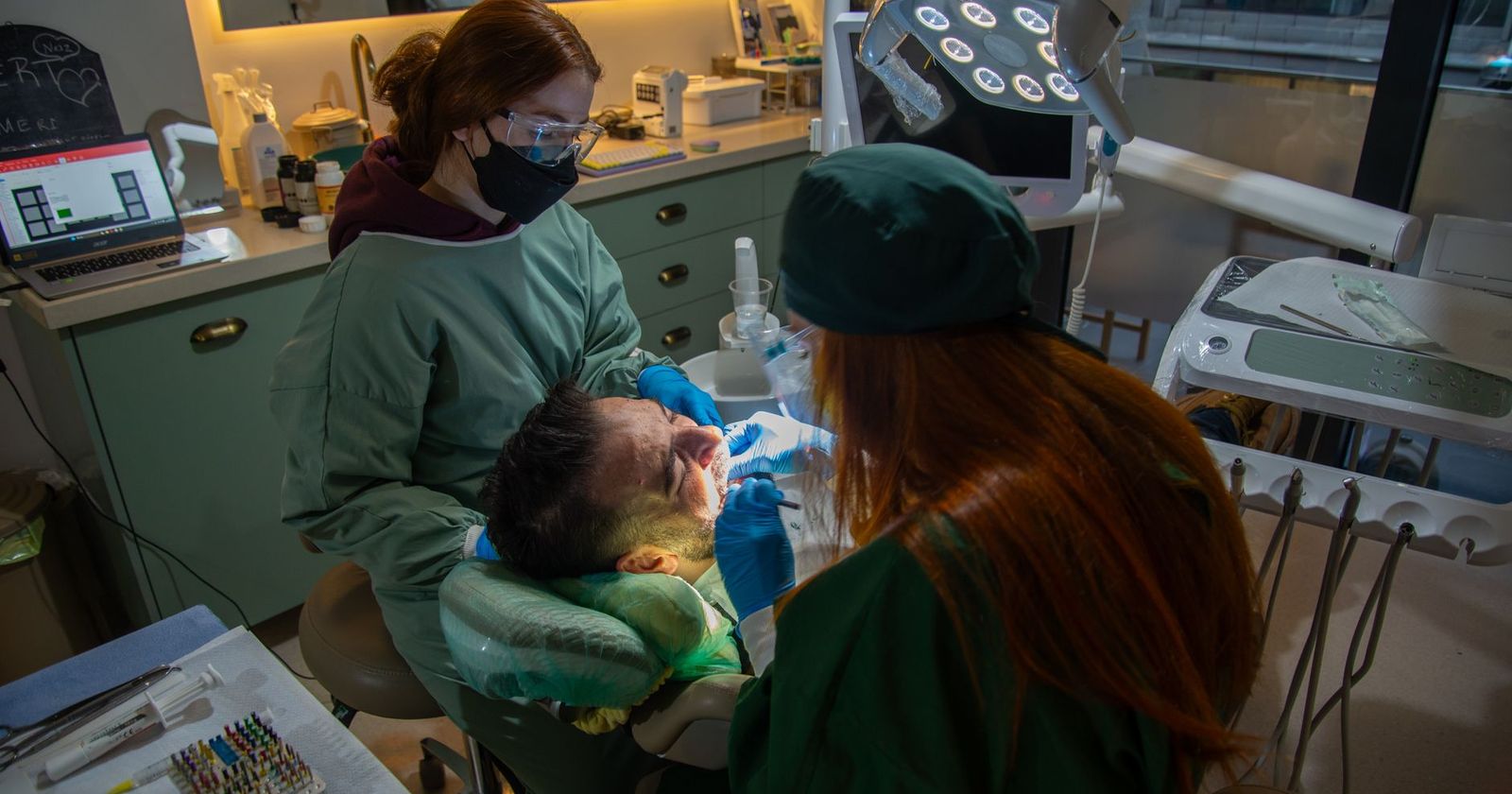
A bone graft after tooth extraction, also called socket preservation, places graft material into the empty tooth socket right after the tooth is removed. It keeps the jawbone from shrinking so there is enough bone for a dental implant or bridge later. The graft is usually done at the same visit as the extraction.
Why the jaw shrinks after an extraction
A tooth root keeps the bone around it active. Once the tooth is gone, that bone starts to resorb. The change begins within weeks and continues for months, and the ridge can lose both height and width. That lost bone makes an implant harder to place later and can leave a dip in the gum line.
A socket graft fills the space with bone or bone-substitute material. Your body uses it as a scaffold and slowly replaces it with your own bone.
Socket preservation vs ridge augmentation
Both procedures add bone where an implant will go. The difference is timing.
| Socket preservation | Ridge augmentation | |
|---|---|---|
| When | Same visit as the extraction | After bone has already been lost |
| What it does | Keeps the existing bone from shrinking | Rebuilds lost width or height |
| Size of procedure | Small; adds minutes to the extraction | Larger; often its own surgery |
| Typical cost | Lower end of $300 to $3,000 per site | Middle to upper end of that range |
| Wait before an implant | About 3 to 6 months | 3 to 6 months or longer, depending on how much bone is rebuilt |
If you might want an implant later, preserving the socket now usually costs less than rebuilding the ridge later.
When we recommend a graft
At Laguna Surgical, Dr. Arthur Johnson recommends a bone graft after nearly every tooth extraction, with wisdom teeth as the main exception. Placing a small graft now is simpler than rebuilding a larger area of lost bone later.
Wisdom teeth are handled case by case. If an impacted wisdom tooth sits close to the second molar, a graft may be placed to protect the bone that supports that neighboring tooth. A Cone Beam CT scan shows how close the teeth are and how much bone is present.
What happens during the procedure
- The tooth is removed as gently as possible to protect the surrounding bone.
- The socket is cleaned.
- Graft material is placed in the socket.
- A protective membrane may be placed over the graft, and the gum is closed with sutures.
The graft adds only a few minutes to the extraction. It is done under local anesthesia, and IV sedation is available if you prefer to be more relaxed.
Graft materials
- Allograft: processed donor bone, the most common choice for socket grafts.
- Xenograft: bone mineral from an animal source, often bovine.
- Synthetic: lab-made materials that act as a scaffold.
- Autograft: your own bone, used less often because it needs a second surgical site.
Your surgeon chooses the material based on the size of the socket and your plans for the site.
Recovery
Recovery is similar to a regular extraction. Expect some swelling and soreness for a few days. Follow a soft diet, avoid straws and smoking, and keep the area clean as instructed. You may notice a few small granules in your mouth during the first week, which is normal.
The graft needs about three to six months to fuse with your bone. After that, the site is ready for a dental implant if that is the plan. Follow-up x-rays confirm the site has healed.
Socket preservation cost
The graft is billed separately from the extraction. A socket preservation graft usually sits at the lower end of the $300 to $3,000 per site range for dental bone grafts. Three things move the price within that range:
- Graft material. Donor bone and bovine bone mineral are the common choices for a socket. Your own bone costs more because it needs a second surgical site.
- Membrane. Some sockets need a protective membrane over the graft, which adds to the cost.
- Number of sites. Each socket is a separate site. Several extractions in one visit means several grafts, but one visit and one anesthesia fee.
Some insurance plans cover part of a graft placed at the time of an extraction, especially when an implant is planned. Our Mission Viejo office accepts many PPO dental plans and Denti-Cal; we do not accept HMO plans. For every type of graft, see the full breakdown in Bone Graft Dental Cost.
Is socket preservation worth it?
If you plan to replace the tooth with an implant, it usually is. The graft is small and placed while the socket is already open. Skipping it can mean a ridge augmentation later, which costs more and adds months before the implant. If you do not plan to replace the tooth, or it is a wisdom tooth, a graft is often unnecessary.
Next steps
If a tooth needs to come out and you may want an implant later, ask about socket preservation before the extraction. Dr. Johnson performs tooth extractions and bone grafting at our Mission Viejo office. Contact us or call (949) 347-9990 to schedule a consultation.
Frequently Asked Questions
Is a bone graft necessary after a tooth extraction?
Not always, but it is often recommended when you may want an implant or bridge later. Without a graft, the jawbone around an empty socket shrinks over the following months. A graft placed at the time of extraction helps keep that bone in place.
How long can you wait to get a bone graft after an extraction?
The simplest time is the same visit as the extraction, when the socket is open. A graft can be placed later, but by then some bone may already be lost, and rebuilding it is usually a larger procedure.
Do I need a bone graft after wisdom tooth removal?
Usually not. The exception is an impacted wisdom tooth that sits close to the second molar, where a graft can help protect the bone that supports the neighboring tooth. Your surgeon decides this from your x-rays or 3D scan.
How long does a socket graft take to heal?
Most socket grafts need about three to six months to fuse with your own bone before an implant is placed. The gum over the site heals much sooner, usually within a couple of weeks.
How much does socket preservation cost per tooth?
A socket preservation graft usually falls at the lower end of the $300 to $3,000 per site range for dental bone grafts, because the socket is small and the graft is placed during the extraction you are already having. A membrane, if needed, adds to the cost. You get a written estimate after your exam.
What is the difference between socket preservation and ridge augmentation?
Socket preservation fills the socket at the time of extraction to keep bone from being lost. Ridge augmentation rebuilds bone that has already shrunk, often months or years after a tooth was removed. Augmentation is a larger procedure, costs more, and adds healing time before an implant.
How much does a tooth extraction with a bone graft cost?
The graft is billed separately from the extraction. The graft portion usually falls between $300 and $3,000 per site, with a simple socket graft at the lower end. You get a written estimate after your exam.
Have questions about your care?
Our oral & maxillofacial team serves Mission Viejo and Covina.
Request an Appointment